Welcome to our comprehensive Indiana Jones 5 Movie Review. Harrison Ford returns for one last thrilling adventure, blending deep nostalgia with high-stakes cinematic action.
This Indiana Jones 5 Movie Review covers the film’s narrative depth, stellar performances, and visual effects. You will discover why this nostalgic thrill ride serves as a fitting conclusion to the iconic franchise, offering actionable insights for fans and cinema enthusiasts alike.
Exploring the Narrative of Indiana Jones and the Dial of Destiny
When embarking on an Indiana Jones 5 Movie Review, one must first examine the narrative structure that anchors this legacy sequel. Titled Indiana Jones and the Dial of Destiny, the film carries the immense burden of closing out one of the most beloved franchises in classic action cinema. The narrative attempts to bridge the gap between the pulpy, rapid-fire adventures of the 1930s and the cynical, space-obsessed culture of 1969. It is a story about time, both literal and thematic, and how heroes fit into a world that has seemingly moved past them.
The Opening Sequence: A Blast from the Past
Every thorough Indiana Jones 5 Movie Review must highlight the ambitious opening sequence. Set in 1944 during the final days of World War II, the film throws audiences right back into the golden age of the character. We see a digitally de-aged Harrison Ford battling Nazis on a speeding train, attempting to secure stolen antiquities. This prologue serves a dual purpose: it gives longtime fans the classic Indy experience they crave, and it establishes the MacGuffin of the film—the Antikythera, or the Dial of Destiny.
While the CGI de-aging has been a point of debate, the sequence itself is a masterclass in pacing. It reminds us why we fell in love with the franchise. The action is relentless, the stakes are clear, and the villainy of the Nazis provides a familiar, comforting rhythm. This section of our Indiana Jones 5 Movie Review concludes that the prologue successfully hooks the audience, setting a high bar for the rest of the film.
Transitioning to the 1960s
Following the adrenaline-fueled prologue, the film abruptly drops us into 1969. Indy is now an aging professor on the brink of retirement. He lives in a cramped New York apartment, awakened by the loud music of his hippie neighbors. This jarring transition is a brilliant narrative choice. It highlights the passage of time, a central theme we will explore throughout this Indiana Jones 5 Movie Review.
The world is celebrating the Apollo 11 moon landing. Humanity is looking up at the stars, while Indiana Jones has spent his life digging in the dirt. This thematic contrast elevates the script, providing a melancholic backdrop to the adventure. When his goddaughter, Helena Shaw, enters his life seeking the Dial of Destiny, Indy is reluctantly pulled back into the fray. The narrative effectively uses Helena as the catalyst to reignite Indy’s adventurous spirit, making the transition from a grumpy retiree back to a whip-cracking hero feel earned.
Standout Performances in the Final Chapter
A critical component of any Indiana Jones 5 Movie Review is the evaluation of the cast. The film features a robust ensemble, blending veteran actors with fresh faces who bring new energy to the beloved franchise.
Harrison Ford’s Triumphant Return
Harrison Ford is the heart and soul of this movie. In this Indiana Jones 5 Movie Review, we must praise his dedication to the role. At eighty years old during filming, Ford brings a gravelly, hard-earned gravitas to the character. He does not try to play the young, invincible hero of Raiders of the Lost Ark. Instead, he embraces the physical and emotional toll that decades of adventuring have taken on his body and mind.
Ford’s performance is incredibly nuanced. He portrays grief, regret, and enduring determination with masterful subtlety. Whether he is mourning personal losses or throwing a desperate punch at a neo-Nazi, Ford’s sheer screen presence holds the film together. This is a vital takeaway in our Indiana Jones 5 Movie Review: Harrison Ford proves that true star power transcends age.
Phoebe Waller-Bridge and Mads Mikkelsen
Phoebe Waller-Bridge plays Helena Shaw, a character who injects a chaotic, morally ambiguous energy into the film. Helena is not a traditional sidekick. She is driven by profit rather than preservation, acting as a stark contrast to Indy’s famous philosophy that artifacts “belong in a museum.” Waller-Bridge delivers sharp, witty dialogue, and her chemistry with Ford provides some of the best moments in the movie.
On the villainous side, Mads Mikkelsen plays Jürgen Voller, a former Nazi turned NASA scientist. Mikkelsen is chillingly effective. He avoids cartoonish villainy, opting instead for a cold, calculating menace. Voller believes that Hitler made mistakes and that, with the Dial of Destiny, he can correct the course of history. As noted in multiple critical analyses on platforms like Rotten Tomatoes, Mikkelsen’s performance ranks among the best antagonists in the franchise’s history. This Indiana Jones 5 Movie Review recognizes his contribution as essential to the film’s success.
Visual Effects and Cinematography
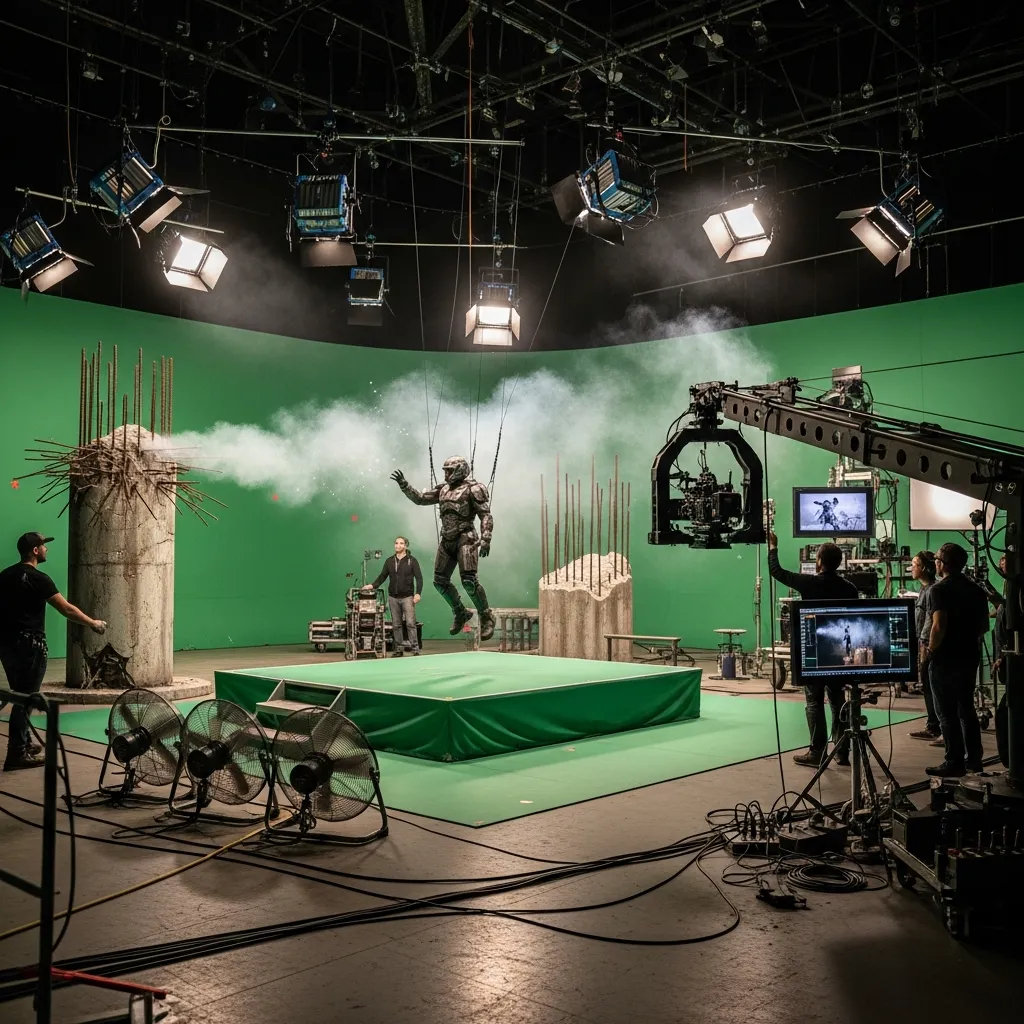
In the modern era of filmmaking, visual effects can make or break a blockbuster. This section of our Indiana Jones 5 Movie Review delves into how director James Mangold and his team utilized technology to bring this adventure to life.
De-Aging Technology Analyzed
The de-aging technology used on Harrison Ford in the opening sequence is a significant talking point in every Indiana Jones 5 Movie Review. The visual effects team utilized hours of archival footage from the Lucasfilm vaults to map a younger Ford’s face onto his current performance. In still frames, the effect is uncanny and near-perfect. In motion, particularly during fast-paced action or when the character speaks extensively, the illusion occasionally falters, revealing the digital seams. However, the emotional resonance of seeing a young Indy outweighs the occasional technical hiccup.
Practical Sets vs. CGI Environments
James Mangold made a concerted effort to utilize practical sets wherever possible. From the bustling streets of a parade in New York to the intricate cave systems in Sicily, the film grounds its action in tangible environments. This is a crucial positive note in our Indiana Jones 5 Movie Review. When Indy and Helena navigate a collapsing tomb, the dust, debris, and physical sets add a layer of danger that pure CGI often lacks.
However, the film does rely heavily on green screens during its larger chase sequences, such as the tuk-tuk pursuit through Tangier. While these scenes are thrilling, they sometimes lack the gritty, practical weight of the truck chase in Raiders. Nevertheless, the cinematography remains lush and vibrant, capturing the globe-trotting essence of adventure movie tropes flawlessly.
Expert Insights: Pacing and Direction

Stepping into the shoes of Steven Spielberg is an unenviable task, but James Mangold handles it with impressive skill. In this Indiana Jones 5 Movie Review, we must evaluate how Mangold’s direction shapes the final product.
James Mangold Taking the Helm
Mangold, known for films like Logan and Ford v Ferrari, brings a mature, character-driven focus to the franchise. He understands that he cannot simply replicate Spielberg’s kinetic, hyper-visual style. Instead, Mangold focuses on the emotional core of the characters. His direction ensures that the action sequences serve the story rather than distracting from it.
Pro Tip for filmmakers: Mangold’s approach to legacy characters demonstrates the importance of respecting the source material while allowing the hero to age gracefully. This Indiana Jones 5 Movie Review highlights Mangold’s deft handling of Indy’s vulnerability as a major directorial triumph.
Common Mistakes to Avoid When Watching
To get the most out of your viewing experience, this Indiana Jones 5 Movie Review offers a few common mistakes to avoid:
- Expecting a 1980s Action Movie: Do not go in expecting the exact pacing of Raiders of the Lost Ark. The film intentionally reflects an older, slower protagonist.
- Ignoring the Thematic Depth: Do not dismiss the quiet moments. The scenes where Indy discusses his past are the emotional anchors of the film.
- Over-analyzing the CGI: While it is tempting to critique every digital frame, focusing too much on the visual effects will detract from the genuine fun of the adventure.
Comparison Table: Original Trilogy vs. Dial of Destiny
To provide a comprehensive perspective in this Indiana Jones 5 Movie Review, let us compare how Dial of Destiny stacks up against the original trilogy.
|
Feature |
Original Trilogy (1981-1989) |
Dial of Destiny (2023) |
|---|---|---|
|
Tone and Pacing |
Kinetic, pulpy, relentlessly fast-paced |
Melancholic, reflective, character-driven |
|
Practical Effects |
Heavy reliance on practical stunts and miniatures |
Blend of practical sets and extensive CGI |
|
Protagonist Arc |
Prime of life, invincible, slightly arrogant |
Aging, grieving, seeking final closure |
|
Villain Archetype |
Occult-obsessed Nazis and cult leaders |
Cold, calculating scientists driven by history |
|
Core Theme |
Faith, magic, and stopping evil |
Time, regret, and accepting the present |
The Emotional Impact and Legacy
As we move toward the conclusion of this Indiana Jones 5 Movie Review, we must address the emotional weight of the film. Dial of Destiny is uniquely obsessed with the concept of time. The MacGuffin literally manipulates time, but the film’s true focus is on how time Ravages the hero. Indy has lost people he loves. He feels obsolete in a world that prioritizes the future over the past.
When the film reaches its wild, audacious third act—which takes a massive swing that will either thrill or alienate viewers—Indy is forced to confront where he truly belongs. The resolution of this character arc is deeply moving. It provides a sense of closure that the previous installment, Kingdom of the Crystal Skull, lacked.
John Williams’ magnificent score elevates these emotional beats. The legendary composer returns to provide the soundtrack, and his music remains the lifeblood of the franchise. Hearing the classic Raiders March swell as Indy performs one last heroic feat is a cinematic joy. This Indiana Jones 5 Movie Review proudly asserts that Williams’ contribution is as vital as Ford’s.
For a deeper dive into the history of the franchise, enthusiasts can explore the extensive Harrison Ford filmography databases on platforms like IMDb to see how this role defined his career.
Ultimately, writing an Indiana Jones 5 Movie Review requires balancing nostalgia with objective critique. The film is not without its flaws. It runs slightly too long, and some of the digital action sequences feel weightless. However, the emotional core of the film is incredibly strong. Harrison Ford gives a performance that honors the legacy of the character, and James Mangold directs with a clear reverence for what came before. It is a film about an old man learning that he still has a place in the modern world.
To sum up our Indiana Jones 5 Movie Review, Dial of Destiny successfully delivers a heartfelt, exciting, and satisfying conclusion to one of cinema’s greatest heroes. It reminds us that while time marches on, legends never truly fade away.
This comprehensive Indiana Jones 5 Movie Review has demonstrated that Harrison Ford’s final outing is a triumph of heart and adventure. By honoring the past while delivering modern cinematic thrills, it secures its place in film history. Grab your popcorn, embrace the nostalgia, and enjoy this unforgettable ride.
FAQs
What is the general consensus in this Indiana Jones 5 Movie Review?
Our Indiana Jones 5 Movie Review finds the film to be a highly satisfying, emotional, and thrilling conclusion to the franchise, praising Harrison Ford’s performance and James Mangold’s thoughtful direction.
Is Harrison Ford too old to play Indiana Jones?
Not at all. As highlighted in our Indiana Jones 5 Movie Review, the film leans into his age, making his vulnerability and enduring toughness the emotional core of the story.
How does the de-aging technology look?
The de-aging used in the opening sequence is ambitious. While it occasionally shows digital flaws during fast motion, it effectively captures the look and feel of a young Harrison Ford for a nostalgic prologue.
Who is the main villain in the film?
Mads Mikkelsen plays Jürgen Voller, a former Nazi scientist working for NASA. His cold, calculating performance makes him one of the franchise’s best antagonists.
Does Phoebe Waller-Bridge make a good co-star?
Yes, her character, Helena Shaw, brings a witty, morally ambiguous energy that contrasts perfectly with Indy’s traditional heroism, adding a fresh dynamic to the adventure.
How does Dial of Destiny compare to Kingdom of the Crystal Skull?
Most critics and this Indiana Jones 5 Movie Review agree that Dial of Destiny offers a much stronger emotional arc and a far more satisfying conclusion than the previous installment.
Is Steven Spielberg involved in this movie?
Steven Spielberg did not direct this film, stepping back to serve as an executive producer. James Mangold took over directing duties and successfully captured the franchise’s spirit.
What is the MacGuffin in this movie?
The MacGuffin is the Antikythera, or the Dial of Destiny, an ancient device created by Archimedes that supposedly has the power to detect fissures in time.
Does John Williams return to compose the score?
Yes, legendary composer John Williams returned to create the score, delivering a phenomenal soundtrack that enhances the emotional and thrilling moments of the film.
Is this truly the final Indiana Jones movie?
Yes, Harrison Ford has explicitly stated that this is his final time playing the character, and the film serves as a definitive, heartfelt goodbye to the iconic archaeologist.